
Where it began
I was on track to make Air Force history.I chose my family instead.Then the life I chose blew up.
I became exceptionally good at being who everyone needed me to be.I never stopped to ask what it was costing me.
I joined the Air Force young and spent the next 28 years learning what I was capable of. Eventually, I earned the rank of Chief Master Sergeant, the highest enlisted rank in the Air Force and one achieved by one percent of the enlisted force.
I was also on a path that could have made me the first female Command Chief from the Munitions Systems career field in Air Force history.
It wasn’t about chasing another title. I wanted to break the ceiling. I wanted to carve a path for the women coming behind me, show my daughters what was possible, and prove to myself that I could do it.
Then I walked away from it.
Not because I couldn’t do it. Not because it stopped mattering.
After almost three decades of choosing the mission, I believed continuing down that road could eventually cost me something that mattered more.
My family.
So I made the choice I believed was right.
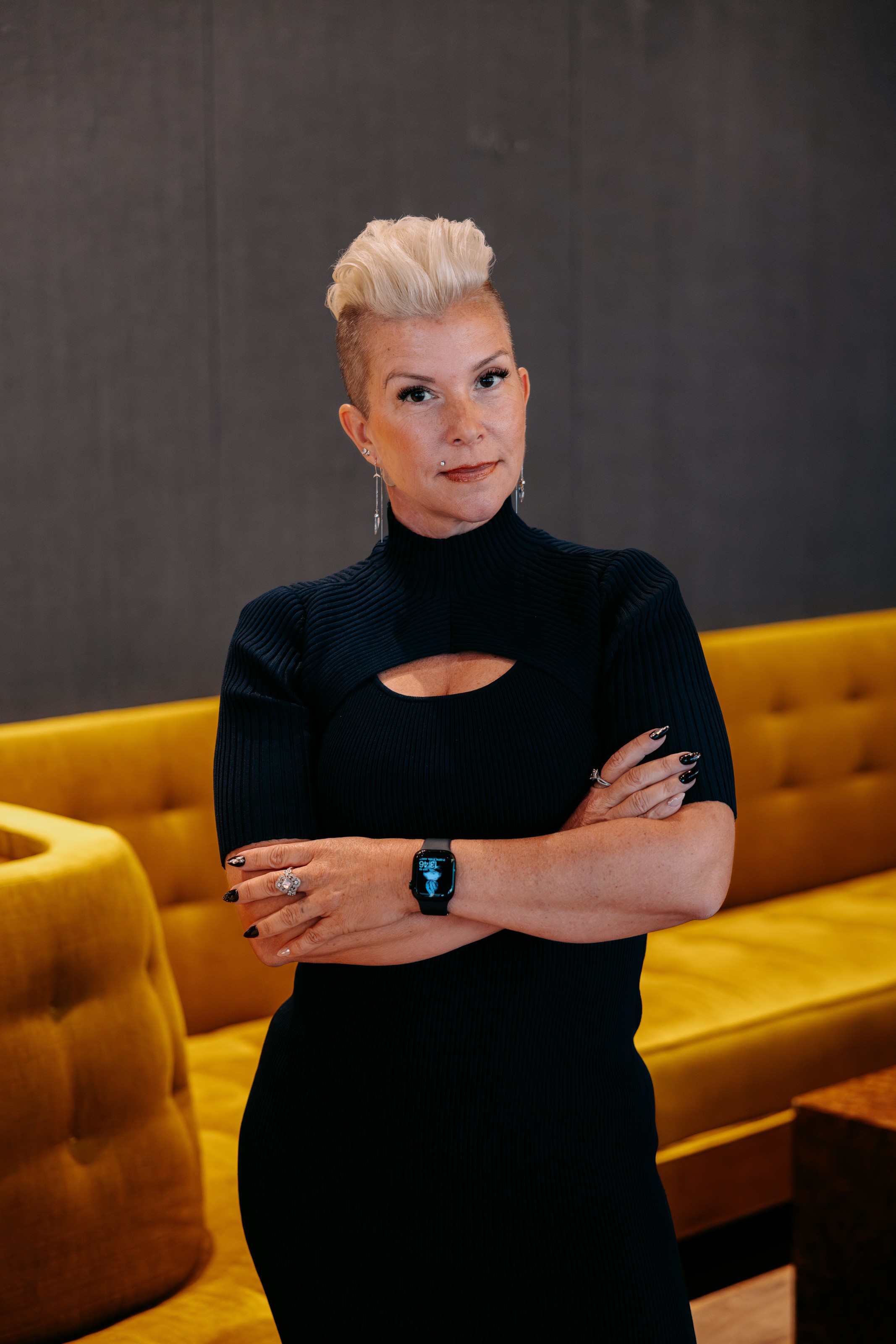
Within three months of choosing my family, my marriage ended in a painful, tumultuous unraveling. My relationships with my children fractured into an estrangement I never imagined possible.
At nearly the same time, the Air Force, the institution that had given me mission, structure, belonging, responsibility, and a clear place in the world for almost three decades, was suddenly behind me.
Leader.Mother.Wife.
Three identities ruptured at once, but not in the same way. My marriage and the fracture with my children left me carrying betrayal, fear, abandonment, rejection, and grief. Retirement brought a different loss: mission, structure, belonging, and a clear place in the world. Together, they left me without the identities that had anchored almost my entire adult life.
Even while my internal world was on fire, my performance never gave me away.
I worked. I solved problems. I made decisions. I poured into others. I rebuilt my world from the outside in. Most people had no idea what I was carrying.
I did not just function.I overfunctioned.And I did it exceptionally well.
Performance became my alibi. My distraction. My proof that I was fine.
Fine had become just another role I knew how to perform.
I had mastered performing in every role. I had never stopped to ask who I was without them.
You know this kind of strength.
You earned your place. Delivered under pressure. Became the person people trust when the stakes are high.
You are still performing. Still leading. Still delivering when it matters.
Performance proves capacity. It does not prove alignment.
The question is not whether you can keep going. You already know you can. The question is whether the way you are operating still serves where you are headed.
For me, the quiet was harder than the crisis.
Crisis gave me something to do.
The harder moments came when there was nothing left to solve.
A random Tuesday afternoon.
I know how to turn adversity into action.
Put me in chaos and I will find the mission.
I can carry an impossible amount of weight and still make the call.
I can lead people through damn near anything.
I had built my identity around what I could endure, solve, and deliver under pressure. I had never stopped to ask whether the strengths that made me successful should still be running the system.
I knew exactly who I was when the stakes were high.
I was less certain who I was when performance was no longer required.
That left me with a harder question:
Am I actually aligned, or have I simply become exceptionally good at performing under pressure?
How we lead ourselves under pressure shapes the decisions we make, the standards we set, and the systems we build.
At first, I did what I had always done.
I tried to solve myself.
I read. I studied. I went to therapy. Then I went further.
I moved through clinical, intellectual, somatic, spiritual, and ceremonial work.
I mapped my history. My beliefs. My body. My nervous system. My patterns. My identity. Every strategy I had used to adapt, perform, and lead.
I took myself apart deliberately. Not to destroy what I had built, but to understand every part of it.
Find the problem. Understand the system. Fix it. Move.
Of course I did. That way of operating had made me successful.
Except I wasn’t a problem to solve.
I stopped trying to fix myself and started trying to understand myself. That changed the questions.
What’s wrong with me?
I started askingWhat’s happening in me?How do I get the old Amber back?
I started askingWhat actually deserves to come forward with me?
That question changed everything.
I stopped looking for what was wrong and started examining how I operated under pressure.
I looked at the decisions I made, the standards I held, the roles I mastered, and the strategies that had made me successful.
I was not trying to erase the woman I had built or return to who I had been. I was deciding what still fit the mission ahead.
The work was to keep what was strong, update what had reached its limit, and choose what would lead next.
Before I could build what came next, I had to know who was doing the building.
That reckoning became the foundation of Elite Performance Strategies.
Whatever you build next will be built by the person you bring with you.
Know yourself. Lead yourself. Build from there.
Explore the EPS Operating System